
2026 ESMO: First-in-Human Phase I/II Study Results of CSPC’s Innovative SYS6090 (JMT108) in Advanced Solid Tumors Presented
On October 25, at the 2026 ESMO Congress, results from the first‑in‑human Phase I/II clinical study of CSPC’s innovative SYS6090 (JMT108) in patients with advanced solid tumors (Study ID: JMT108‑001) were presented as a Rapid Oral presentation (Abstract ID: 1009RO).
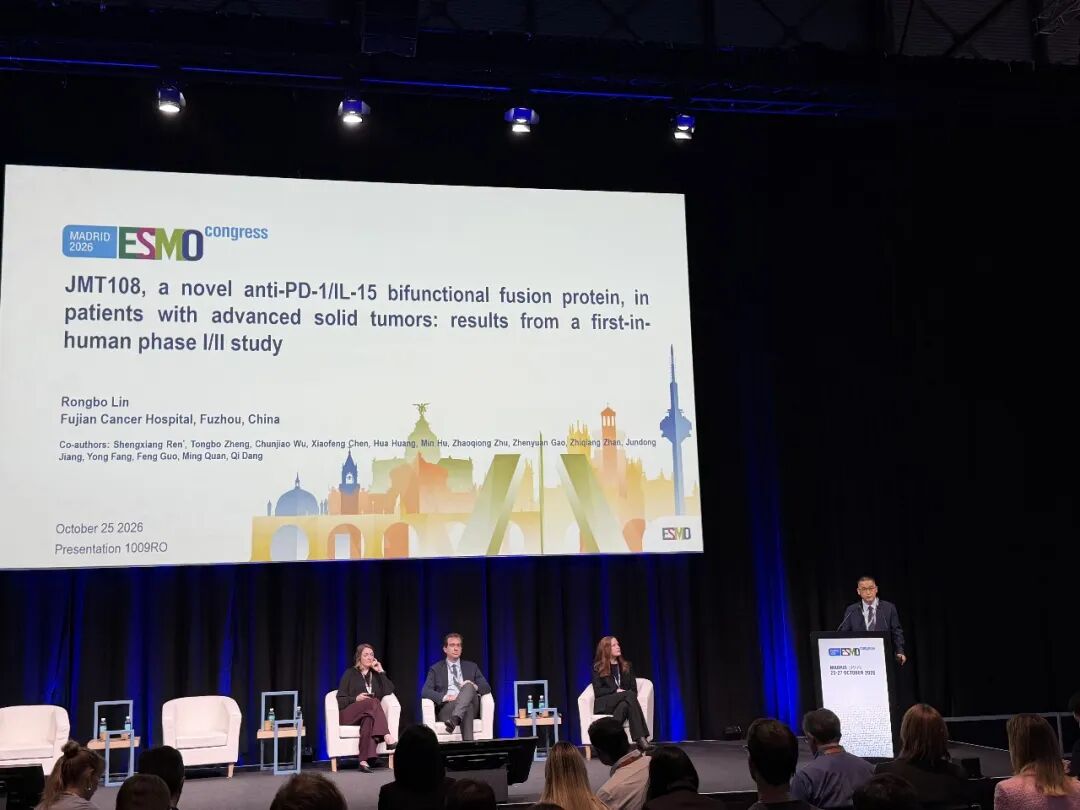
Prof. Rongbo Lin from Fujian Cancer Hospital presented the report on behalf of the research team. This presentation focused on the preliminary efficacy and safety of the agent in hepatocellular carcinoma (HCC) and colorectal cancer (CRC), and also reported partial responses observed in other tumor types such as non-small cell lung cancer (NSCLC).
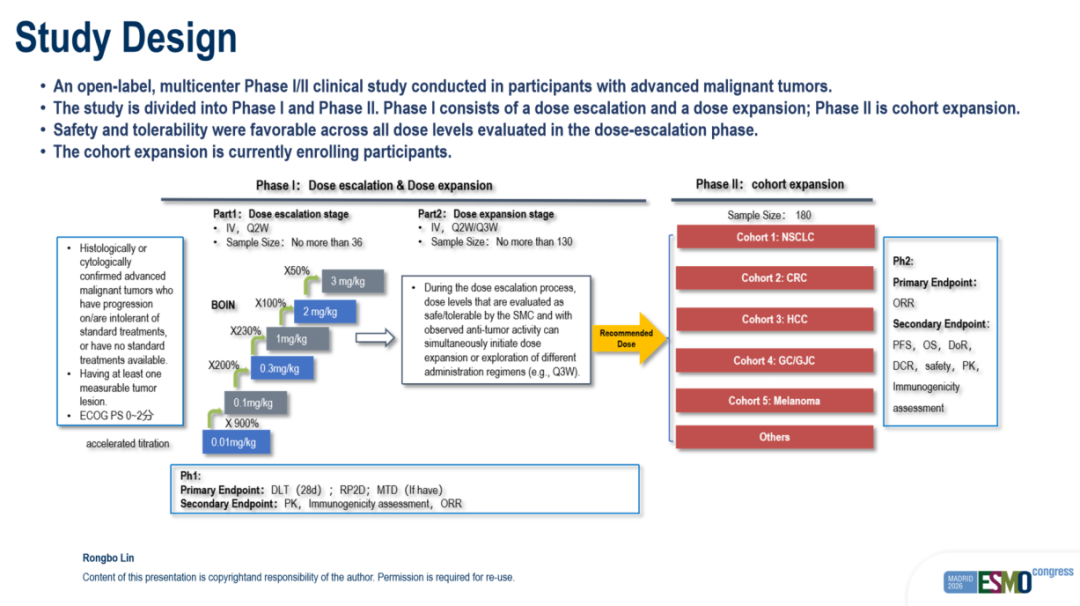
JMT108‑001 is an open-label, multicenter Phase I/II clinical study enrolling patients with advanced malignant solid tumors who have progressed on or are intolerant to standard therapies. The Phase I component consists of an accelerated titration part (0.01 mg/kg once every 2 weeks), a Bayesian optimal interval (BOIN) dose-escalation part (0.1, 0.3, 1, 2 and 3 mg/kg once every 2 weeks), and a dose-expansion phase to assess safety and preliminary efficacy. The Phase II portion involves cohort expansion for selected tumor types, and patient enrollment is ongoing. Primary endpoints include safety, objective response rate (ORR) and pharmacokinetics. The data cutoff for this presentation was April 13, 2026.
Key Results
Efficacy
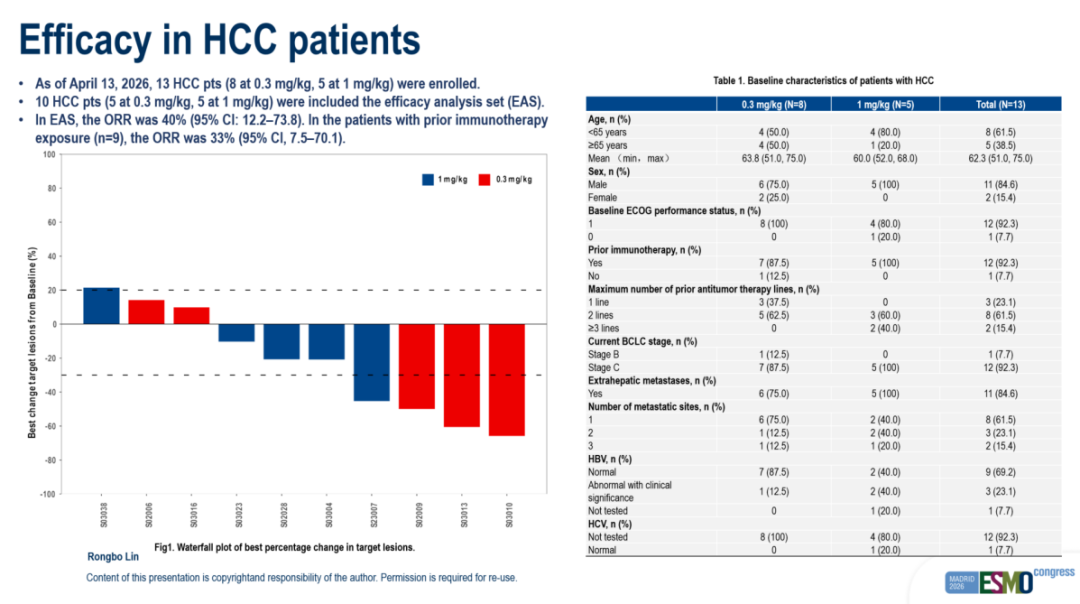
HCC: 13 patients were enrolled. 76.9% (10/13) had received at least two prior lines of therapy, 92.3% (12/13) had received prior immunotherapy, and 92.3% (12/13) were at Barcelona Clinic Liver Cancer (BCLC) stage C. Ten patients with at least one post-baseline tumor assessment were included in the efficacy analysis set (EAS). In the EAS, the ORR was 40% (4/10; 95% confidence interval (CI): 12.2–73.8). Among patients with prior immunotherapy (n=9), the ORR was 33% (95% CI: 7.5–70.1).
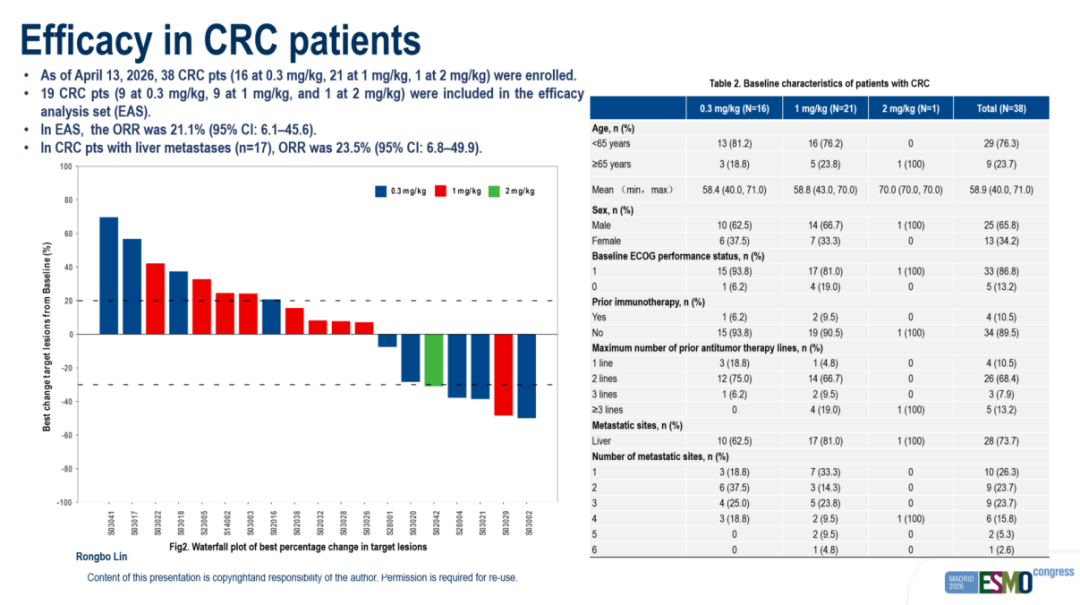
CRC: A total of 38 patients were enrolled. Of these, 89.5% (34/38) had received at least two prior lines of therapy, and 73.7% (28/38) had liver metastases. Nineteen patients were included in the EAS, with an ORR of 21.1% (4/19; 95% CI: 6.1–45.6). The ORR among patients with liver metastases in the EAS (n=17) was 23.5% (95% CI: 6.8–49.9), which was similar to the overall EAS result.
NSCLC: 13 patients were enrolled, among whom 4 achieved partial response, with an ORR exceeding 30.0%.
Other tumor types: Partial responses were also observed in small cell lung cancer, melanoma, renal cell carcinoma, breast cancer and gynecologic malignancies.
Safety data were evaluated based on 51 patients with HCC and CRC. The incidence of any-grade treatment-emergent adverse events (TEAEs) was 86.3% (44/51). The incidence of grade ≥3 treatment-related adverse events (TRAEs) was 17.6% (9/51), serious TRAEs accounted for 9.8% (5/51), and the rate of permanent discontinuation due to TRAEs was 2.0% (1/51). One patient experienced a fatal TEAE, which was assessed as not treatment-related. The incidence of immune-related adverse events (irAEs) was 33.3% (17/51).
Common TEAEs included hypoalbuminemia, anemia and elevated liver enzymes. Safety and tolerability were generally favorable across all dose levels in the dose-escalation phase, with no unexpected safety signals identified.
ConclusionsI
n this Phase I study, SYS6090 (JMT108) demonstrated a manageable safety profile and preliminary antitumor activity in patients with advanced solid tumors. Among evaluable patients with HCC and CRC, the ORR reached 40% and 21.1%, respectively. These findings support further evaluation of the clinical value of SYS6090 (JMT108) in colorectal cancer, hepatocellular carcinoma and other tumor types. Patient enrollment for the Phase II cohort expansion study is progressing smoothly.
About SYS6090 (JMT108)
SYS6090 (JMT108) is a recombinant fully human anti‑PD‑1, asymmetric bifunctional Fc‑fusion protein fused with IL‑15. It adopts a mutated immunoglobulin G1 (IgG1) subtype to attenuate Fc‑mediated immune functions. Via its left arm, it targets PD‑1‑positive (PD‑1⁺) tumor‑infiltrating immune cells and blocks the immunosuppressive effect resulting from the interaction between PD‑1 and programmed death ligand 1 (PD‑L1). Through its right arm, it binds to the IL‑15 receptor, activates downstream signaling pathways, and further promotes the activation and proliferation of relevant immune cells.
In addition, the unique molecular design of SYS6090 (JMT108) can reduce the expression abundance of PD‑1 on the surface of PD‑1⁺ cells, and weaken the binding of interleukin‑2 receptor β subunit (IL‑2Rβ) and interleukin‑2 receptor γ subunit (IL‑2Rγ) on PD‑1‑negative cells. This reduces systemic toxicity caused by the activation of off‑target immune cells.
In August this year, the product was granted Fast Track designation by the U.S. Food and Drug Administration (FDA) for the treatment of patients with microsatellite‑stable (MSS) or proficient mismatch repair (pMMR) metastatic colorectal cancer (mCRC) whose disease has progressed after prior standard systemic therapy.